KPMG / 2014-2020
Project Victor: research that rebuilt the audit experience

The UX and design study inside KPMG's Auditor Experience Transformation: 50 interviews across multiple countries, turned into personas, a journey atlas, and a rebuilt, mobile-ready audit experience.
Enterprise audit software had grown by accretion. Auditors moved through a long engagement cycle using tools that had been bolted together over years, and leadership needed evidence, not opinions, about what to rebuild and why.
Project Victor was the UX and design study inside KPMG's Auditor Experience Transformation effort. It produced that evidence and the experience direction that followed.
My role
Victor sat inside a firm-wide transformation program. I led the UX and design study: framing the research, synthesizing it into artifacts the organization could act on, and turning the findings into an experience direction the broader transformation could build against.
Listening first, at scale
We ran 50 interviews with auditors across multiple countries. The goal was not validation of a design we already had in mind. It was to understand the real shape of the work, from the most junior associate to the audit leader who answers for the result.
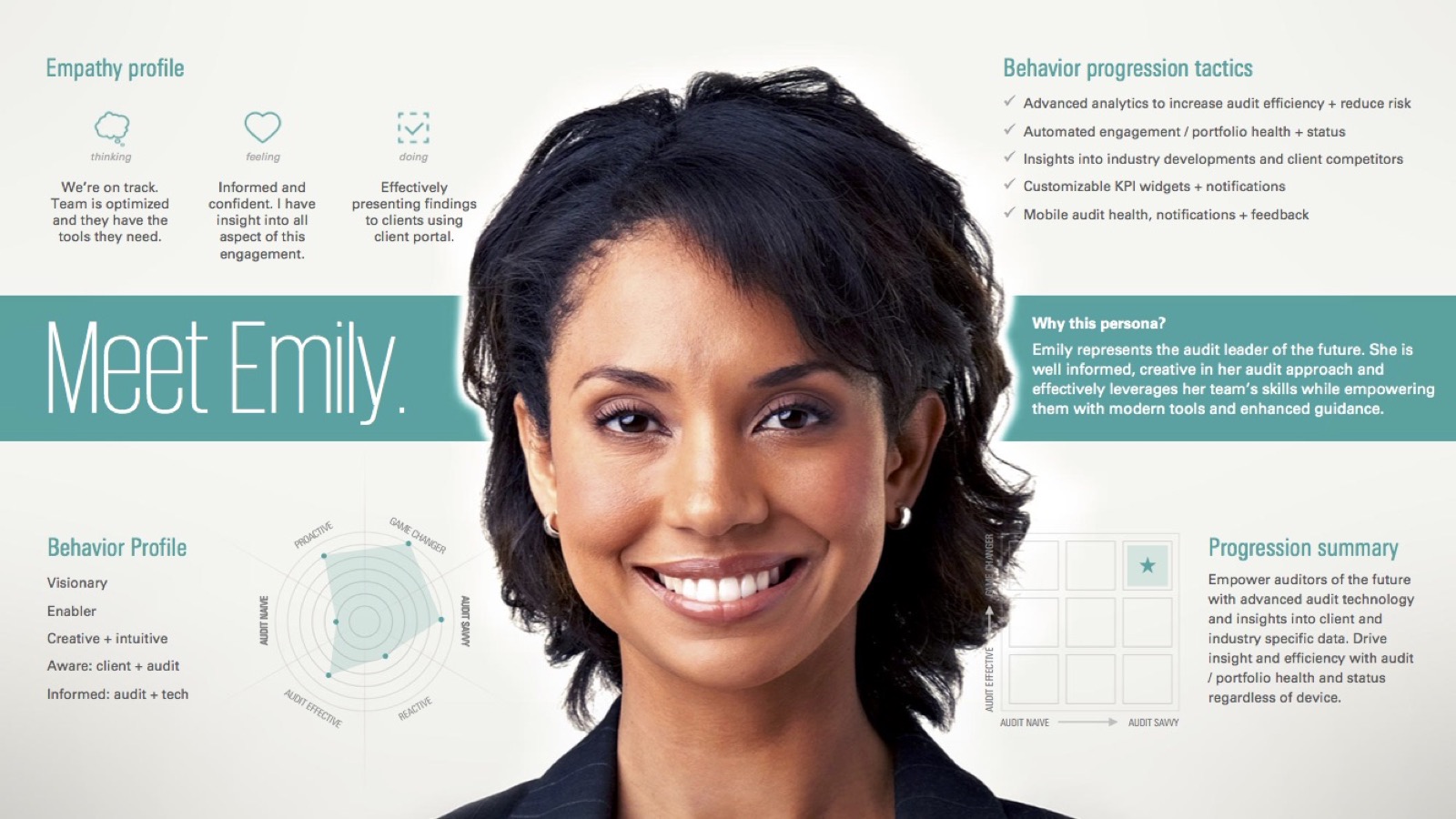
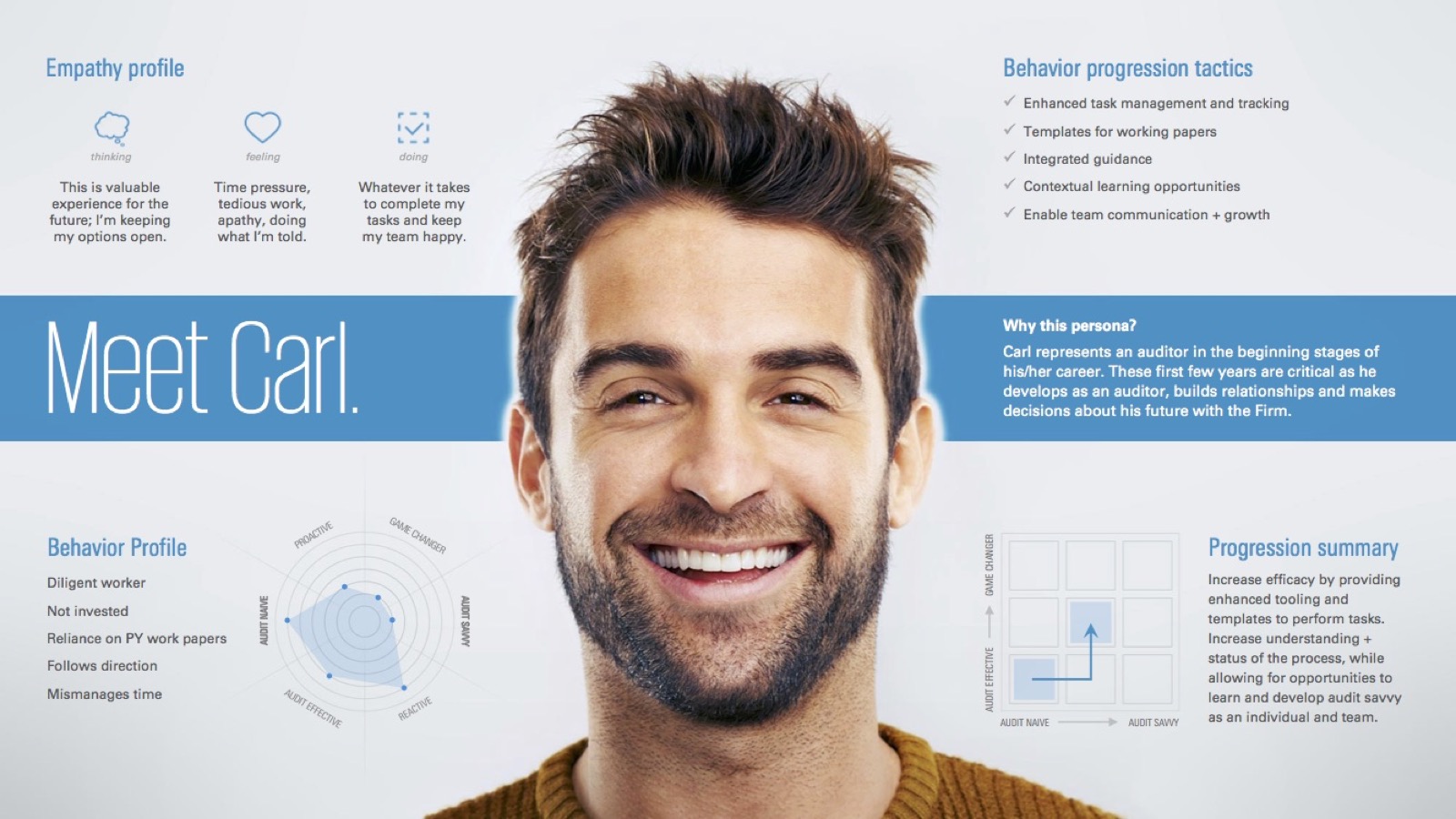
We turned that into personas grounded in behavior, not demographics. Each one paired a profile with a behavior model: how this person thinks, what they feel at each stage, and what would actually help.
Mapping the whole engagement
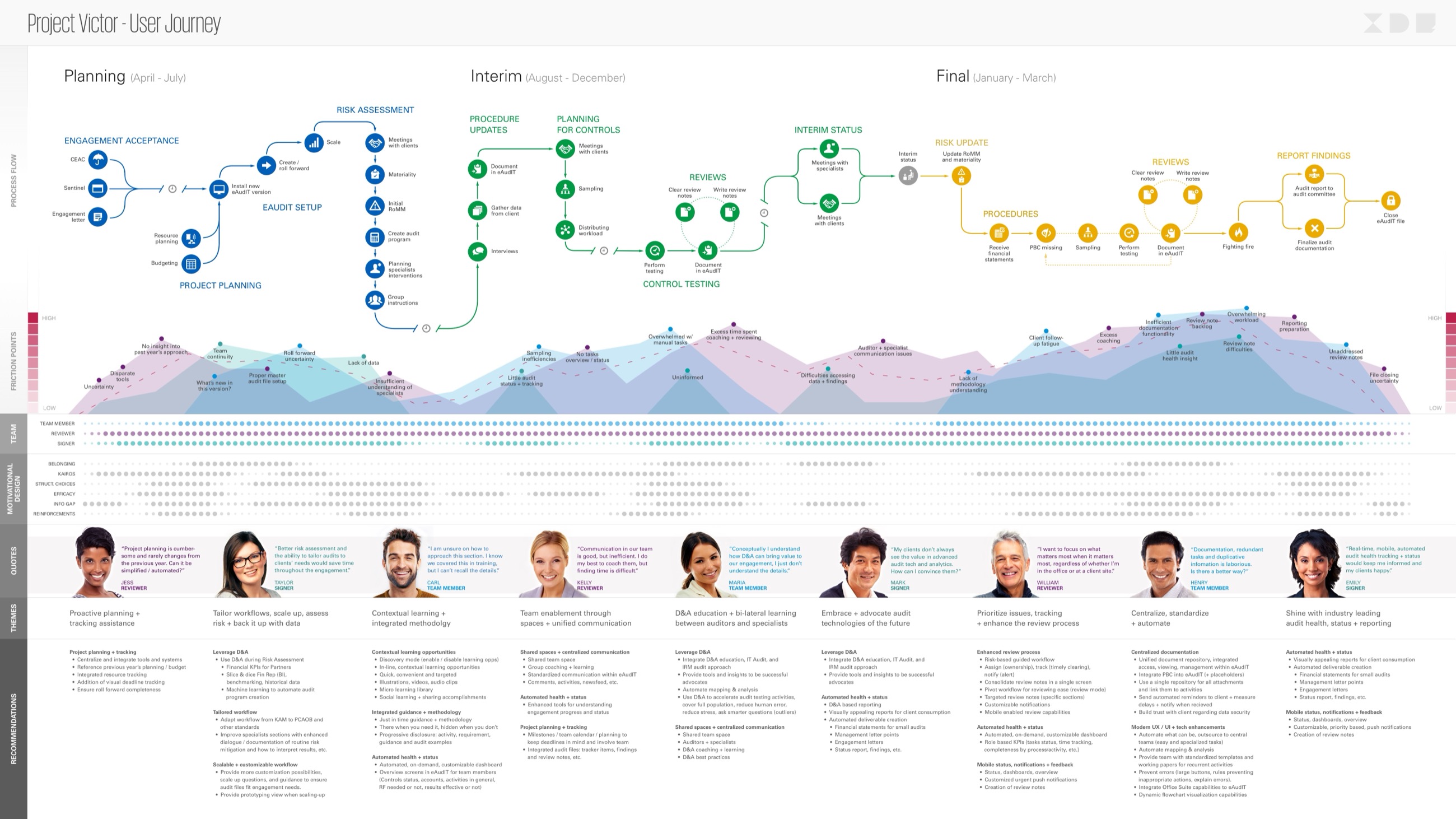
Audit is a year-shaped journey: planning, interim, and final, each with its own phases, hand-offs, and pressure points. We mapped it end to end and traced the emotional curve across it, so the gaps were undeniable and the priorities were obvious.
A shared language for the team
The persona set spanned the range of real audit roles, from the cautious skeptic to the early adopter. That gave the broader team a shared, human vocabulary for every design and prioritization decision that followed.
Outcomes
Victor left the organization with more than a redesign. It produced a research foundation it could keep building on: shared personas, an end-to-end journey atlas, and an experience direction shaped by evidence and built to work on the devices auditors actually carry.
What it taught me about AI products
Victor predates my AI work, but it is the discipline underneath it. Before you can decide what to automate, you have to know exactly where the work hurts and who feels it. The research rigor that mapped this audit journey is the same rigor I use to decide where AI genuinely helps and where it would just add a confident-sounding layer on top of a broken process.