UnitedHealth Group / 2020-2026
Mercury: re-imagining procurement from scratch

Unifying disparate systems into one experience for employees and procurement professionals. Groundbreaking when it launched, and ahead of its time.
At a Fortune 5 company, buying something should be simple. It was not. Procurement at UnitedHealth Group ran across a patchwork of disconnected systems, manual categorization, and request queues measured in days. The people who needed to buy things had no single place to start, and the platform behind them carried $20 billion in vendor spend.
Mercury is the product we built to fix that. We re-imagined the procurement experience from scratch: one front door for every employee who needs to buy something, and one coherent workspace for the procurement professionals who make it happen.
My role
I led Mercury end to end as Head of Product: the vision, the roadmap, the brand, and a cross-functional team of product managers, technical PMs, and UX and UI designers.
The core idea: an experience layer, not another system
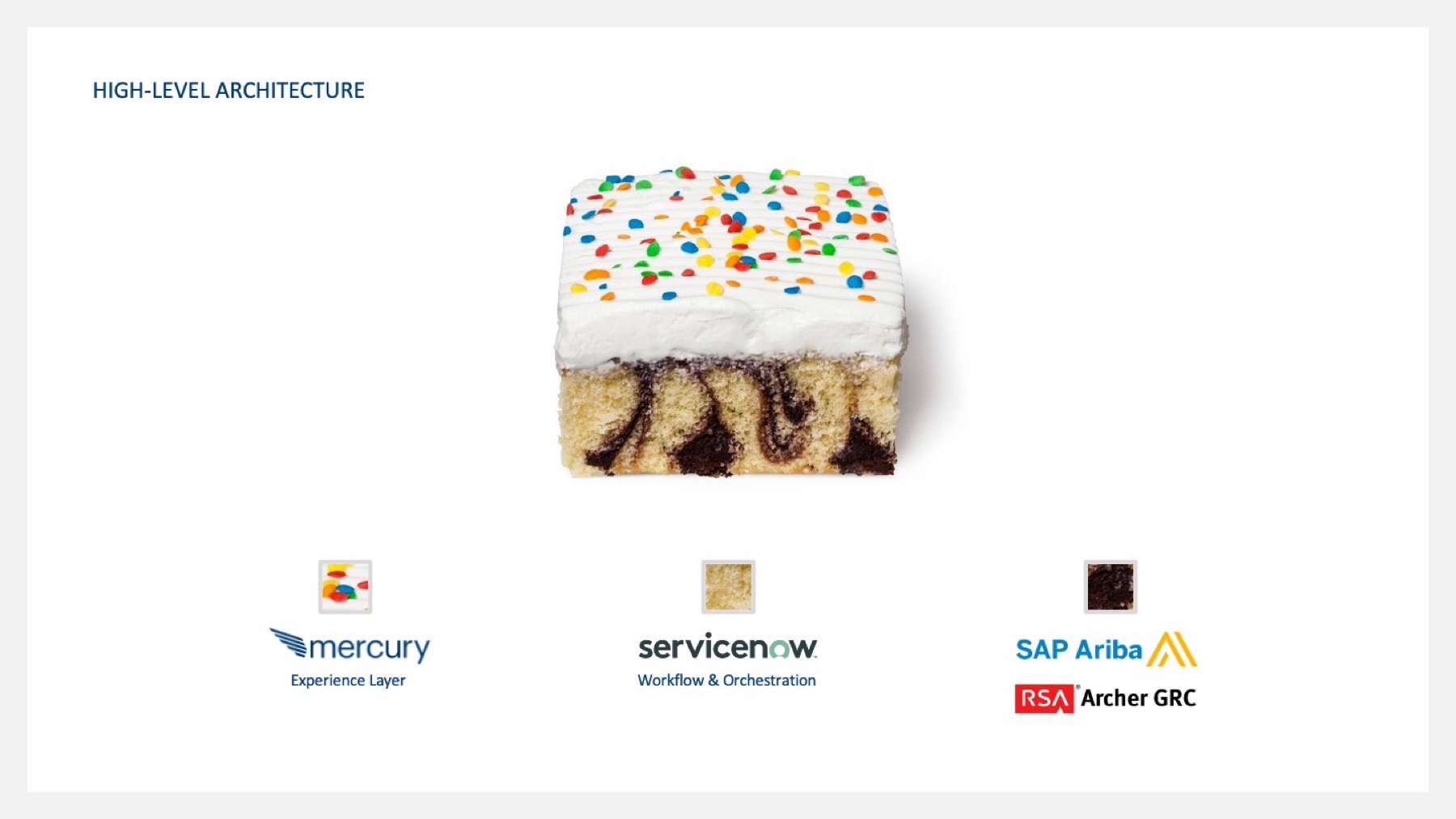
The mistake would have been to build a fourth system next to the three that already existed. Instead, Mercury sits on top of them. It is the experience layer over ServiceNow for workflow and orchestration and the systems of record underneath, including SAP Ariba and RSA Archer GRC. To the employee it is one coherent product. Underneath, it routes work to whatever system should own it.
Designing from the real journey
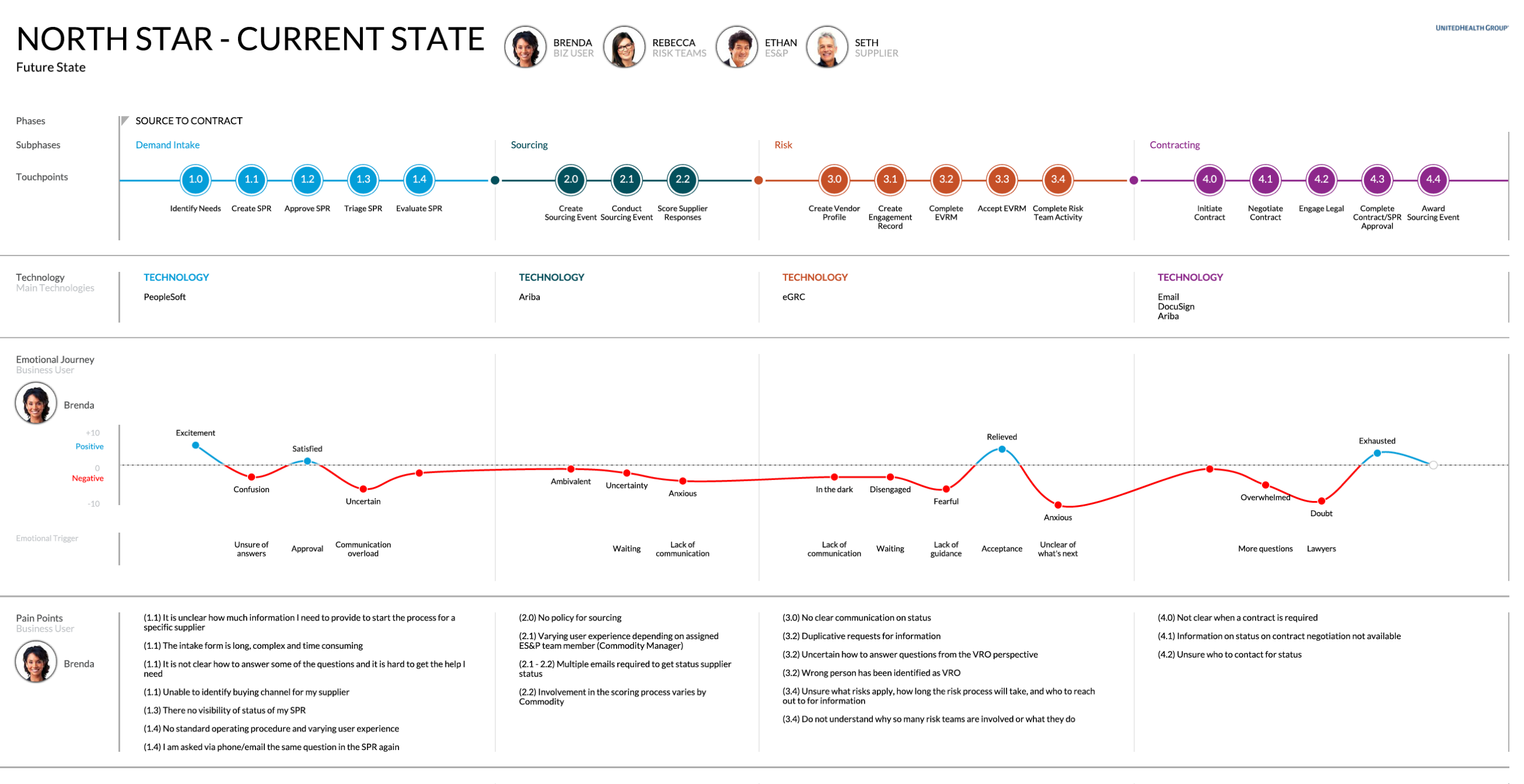
Before designing screens, we mapped the actual journey: demand intake, sourcing, risk, and contracting. We charted where the work stalled, where people felt lost, and where the emotional low points clustered. That map, not a feature list, set the priorities.
Two audiences, one product
Most enterprise tools are built for the specialists who run the process. Mercury was designed for two audiences at once. An employee who buys something twice a year gets a guided path in plain language and always knows where a request stands. A procurement professional gets the tasks, the activity and the status for every request in one place, without working across several systems to assemble the picture.
Adoption is a product problem
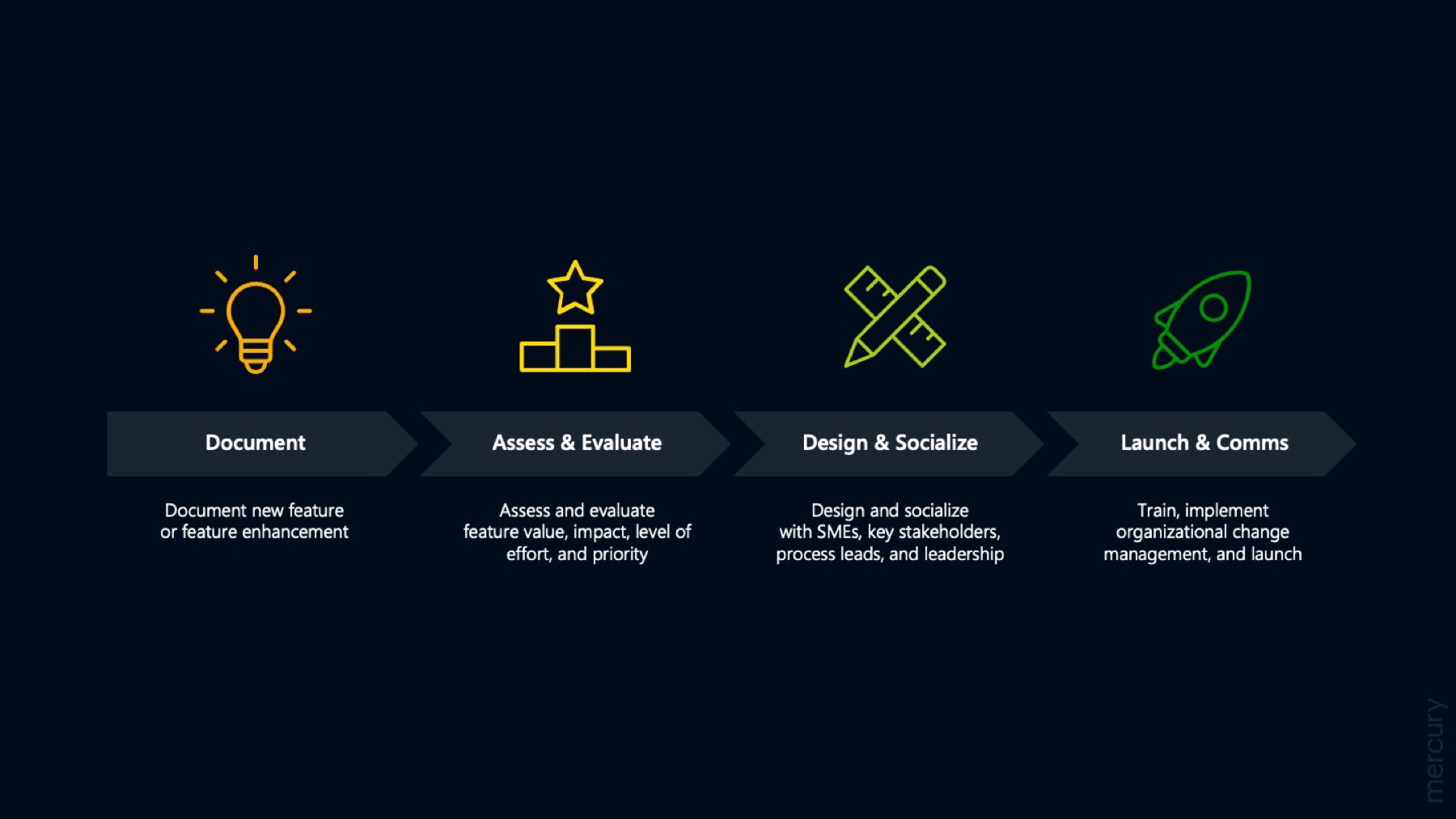
A platform for 400,000 people lives or dies on adoption. We treated change management as part of the product: clear communication, a recognizable brand, and an onboarding path that met skeptics where they were rather than assuming enthusiasm.
Outcomes
Disparate systems became one product. People had a single place to start and could see where their request stood, which is what the journey map said they were missing. For its time it was an unusual thing to find inside a company this size: an internal platform designed and branded with the care of a consumer product.
The function Mercury fronts now manages $20 billion in vendor spend and negotiates 8,500+ contracts a year, and in 2026 it has delivered $557 million in rate-reduction savings year to date. Those are the procurement organization's results; my part was supporting them from the product side, making the platform the place where that discipline is easy to practice.
Where it led
The next chapter for Mercury was AI. Intake was the obvious place to start, because a person describing what they need in plain language is exactly the problem these models are good at, and I was working on making the platform AI-first when a different opportunity arrived. In 2026 I moved to lead AI transformation for Corporate Development.
Mercury is the reason I was ready for it. Years of unifying systems, mapping real journeys and earning adoption from 400,000 people turned out to be the foundation for putting AI to work inside a function: understand the work first, build the experience around the person, and treat adoption as part of the product.